

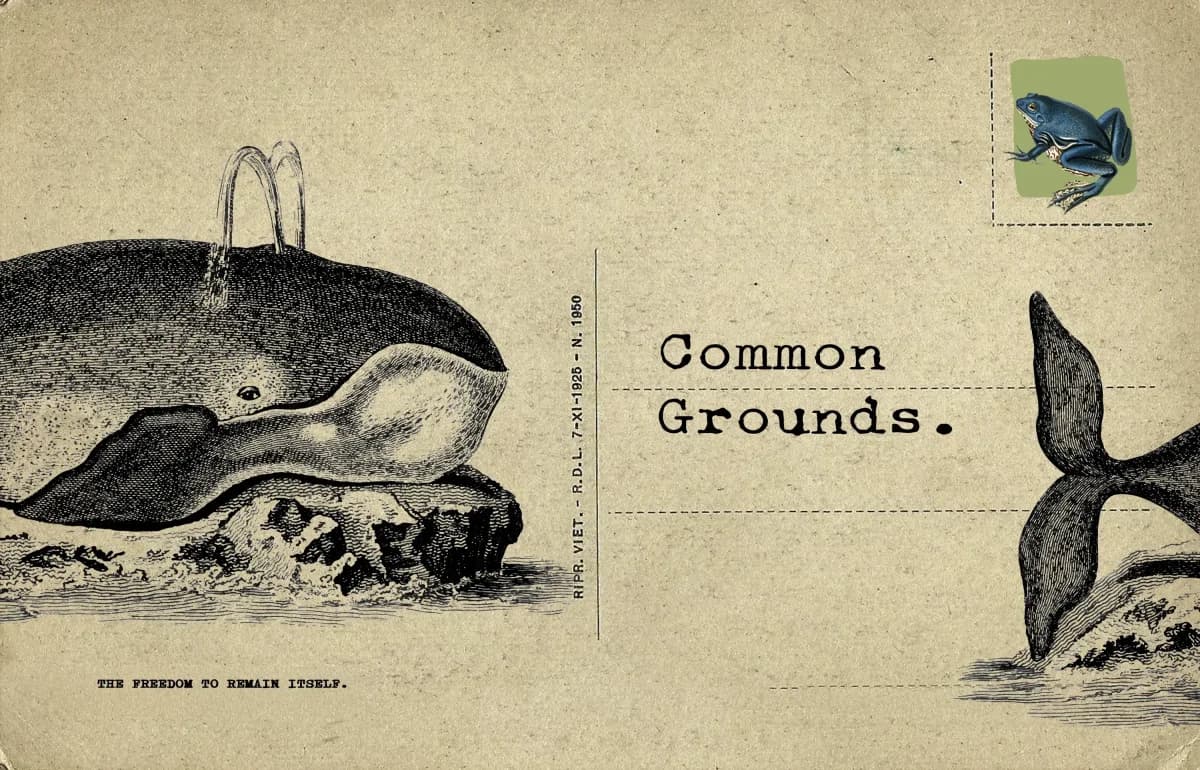
Honest to the land that produced it. Honest to the season that shaped it. Honest to the people who spent months—and often generations—learning how to care for it. Rather than forcing every harvest to taste the same, specialty coffee allows each one to carry its own identity. A warmer summer, an unexpected rainfall, a higher elevation, richer soil, or a slower drying process—these are not imperfections to be corrected. They are part of the coffee's character. Uniformity has its place. It offers familiarity, consistency, and scale. Yet there is another kind of value in allowing nature to speak without asking it to repeat itself. Specialty coffee chooses the latter. It allows the climate of a particular year to be tasted. It allows the soil beneath a particular farm to leave its signature. It allows the decisions of growers, processors, roasters, and brewers to remain visible instead of disappearing beneath standardisation. Every careful choice becomes part of the cup rather than something hidden behind it. That honesty is demanding. It asks farmers to harvest only when the cherries are ready, even when returning to the same tree several times costs more than harvesting everything at once. It asks processors to monitor fermentation with patience rather than haste. It asks roasters to adapt to every harvest instead of expecting every harvest to adapt to them. It asks cafés to embrace coffees that change with the seasons rather than pretending that nature never does. Honesty has always been more difficult than imitation. Perhaps that is why it costs more.
Time Cannot Be Manufactured.
In a world that rewards speed, coffee has quietly become one more thing expected to arrive quickly, cheaply, and exactly the same every time. We have grown accustomed to abundance without wondering what it asks of the land. We celebrate convenience without always asking what was sacrificed to create it. The faster the world moves, the easier it becomes to mistake efficiency for quality. Yet the finest things have rarely been born from urgency. A tree cannot be hurried into maturity. A harvest cannot be persuaded to arrive before its season. A roast cannot reveal what patience never allowed to develop. Some things refuse to become extraordinary on command. Specialty coffee does not resist speed because it romanticises slowness. It resists speed because some forms of quality simply cannot exist without time. Time is not a marketing concept. It is an ingredient. It lives in the careful harvest, the patient drying, the thoughtful roast, and the quiet moments between brewing and drinking. Remove enough of it, and coffee may still exist—but something essential is left behind. This is why specialty coffee often feels deeply personal. It carries the fingerprints of everyone who touched it. The grower who waited another week before harvesting. The processor who turned the drying beds beneath an afternoon sun. The roaster who discarded imperfect batches in pursuit of one that truly honoured the bean. The barista who understood that precision is another form of respect. None of these decisions are accidental. None of them are visible at first glance. Yet together they become the cup.
What We Are Really Paying For.
Perhaps value has never been measured by what something costs to buy, but by what it costs to make without compromise. Perhaps that is why craftsmanship has always been difficult to scale. It asks for attention instead of automation, judgment instead of repetition, and responsibility instead of shortcuts. It demands that every person in the chain leave something of themselves in the final result. Coffee has travelled a remarkable journey. It has crossed continents, shaped cultures, inspired revolutions, and become part of daily life for billions of people. Along the way, we learned how to produce it faster, transport it farther, and serve it more efficiently. Those achievements matter. But perhaps progress is not only about discovering new ways of doing things. Perhaps it is also about recognising the wisdom in what was worth preserving all along. That may be the quiet promise of specialty coffee. Not that it has reinvented coffee, but that it has given us a new appreciation for its oldest virtues—care instead of haste, character instead of uniformity, craftsmanship instead of convenience, and a deeper respect for the land, the harvest, and the people whose work rarely appears on the label. Perhaps that is what we are really paying for. Not a more expensive cup. Not a luxury. Not a trend. But the freedom for coffee to remain exactly what it has always been—an honest expression of nature, shaped by human hands and given the time to become it.