

TWO SIDES OF THE SAME SPECTACLE
Coffee is changing. Good. It should. A living crop should never be condemned to one way of becoming itself. Farmers experiment. Processors experiment. Fermentation has become a laboratory of its own. Yeasts are selected. Temperatures are controlled. Oxygen is removed. Time is stretched. Fruit, botanicals, spices and other substrates enter the conversation. The cup gets louder. Sometimes astonishingly so. But as coffee becomes more experimental, something else has become increasingly important. The truth. Because there are two very different things happening in coffee today. One is innovation. The other is disguise. And they should never be confused.
THE MOON DOES NOT NEED TO PRETEND
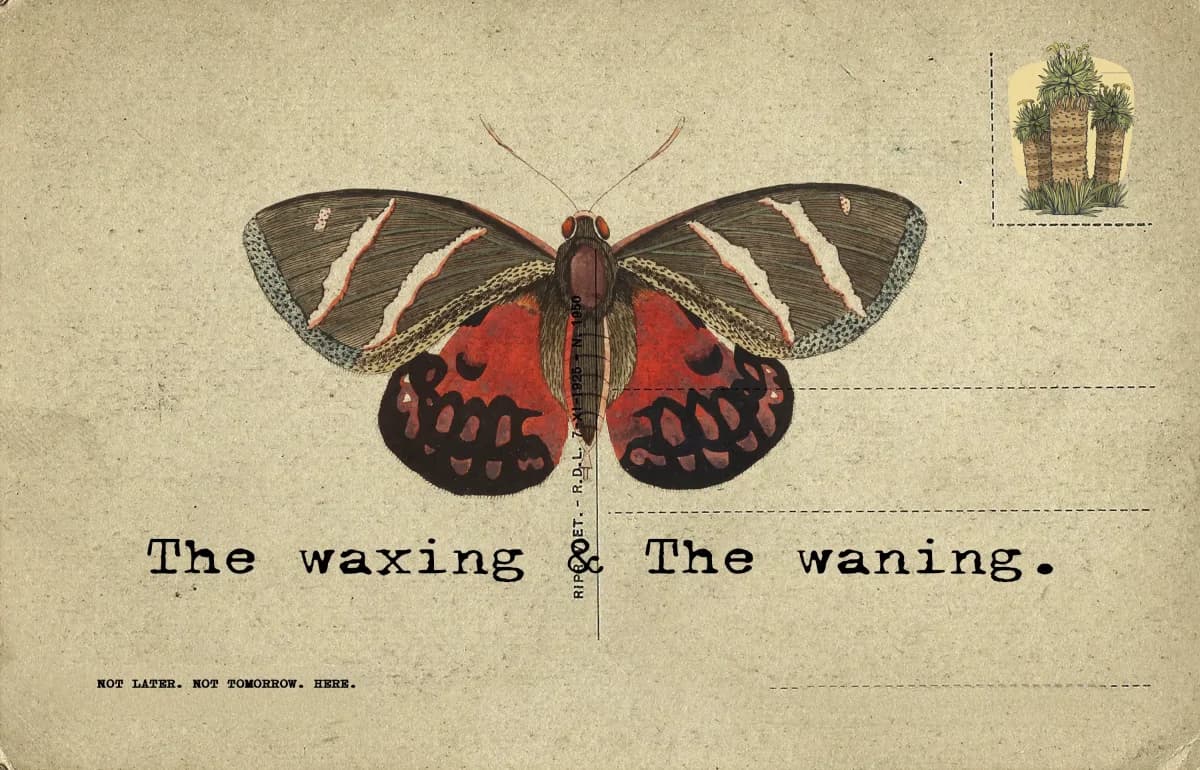
Think of the moon. Waxing. Waning. One gathers light. The other gives it away. Neither is pretending to be the other. Both belong to the same spectacular event. Coffee deserves the same honesty. Infused coffee can be interesting. Co-fermented coffee can be interesting. Neither needs to borrow the other’s name. The problem is not that external ingredients enter coffee. The problem begins when the language surrounding them becomes deliberately unclear. The specialty coffee industry itself has acknowledged the problem: infused, flavoured, and co-fermented are often used interchangeably, while formal universal definitions remain absent. That ambiguity is not harmless. Because words are not decoration. Words tell us what happened. And when what happened is hidden behind what sounds better, we are no longer describing coffee. We are marketing it.
CALL IT WHAT IT IS
If coffee was fermented alongside fruit, tell us. If fruit pulp, juice, botanicals or spices participated in the fermentation, tell us. If a selected microorganism was introduced, tell us. If flavour was introduced directly through infusion, tell us. If an extract, concentrate, flavouring or aromatic compound was used, tell us. Not because any of these things automatically make a coffee inferior. Because they make it different. That difference matters. Current industry explanations generally distinguish co-fermentation as an intervention occurring during active fermentation, while infusion can involve a more direct introduction or transfer of flavour. The boundaries are not universally codified, which makes disclosure even more important. The answer to uncertainty cannot be more ambiguity. It has to be more information.
WE ARE NOT AGAINST INFUSED COFFEE
Let us make this clear. We are not afraid of infused coffee. We are not purists hiding behind the past. We are not interested in pretending that coffee must remain untouched forever. Coffee has always been transformed. Drying is transformation. Fermentation is transformation. Roasting is transformation. Brewing is transformation. The entire history of coffee is a history of people discovering new ways to change what the seed can become. So experiment. Push it. Break it. Make something nobody has tasted before. But own the experiment. An infused coffee does not become less legitimate because it is infused. A co-fermented coffee does not become more legitimate because it is called co-fermented. And a naturally processed coffee does not become more authentic simply because the label sounds traditional. The process is the story. Tell the story.
THE PROBLEM WITH BORROWED LANGUAGE
Here is where we become uncomfortable. The coffee world has spent years teaching consumers to look deeper. Origin. Altitude. Variety. Soil. Microclimate. Harvest. Processing. Fermentation. Traceability. We have told people that every detail matters. Then an intensely flavoured coffee arrives, and suddenly the most important detail can become the least visible one. That is a contradiction. If a coffee tastes overwhelmingly of strawberry, passionfruit, vanilla, mango or some other unmistakable flavour, the first question should not be: “How can we make this sound like it came entirely from the bean?” It should be: “What happened to this coffee?” That is not suspicion. That is curiosity. And curiosity is what specialty coffee was supposed to encourage.
ANAEROBIC IS NOT AN INCANTATION
We have also created another problem. Words that once described processes have started becoming marketing language. Anaerobic. Experimental. Thermal shock. Carbonic maceration. Extended fermentation. These words can describe real techniques. But a technical word does not automatically make a coffee transparent. “Anaerobic” tells us something about the environment. It does not necessarily tell us everything that entered that environment. A coffee can be anaerobic and still involve additional ingredients. A coffee can be co-fermented and still require further explanation. A coffee can be called experimental and tell us almost nothing. Process names should open the door. They should not close it.
THE CUP CANNOT BE THE ONLY EVIDENCE
And here is the strange part. Sometimes you can smell the difference before anyone tells you. One coffee may present fruit with the architecture of fermentation: acidity, sweetness, texture, structure, and a flavour that feels woven into the cup. Another may arrive like a flavour has been placed directly on top of it. Both can be spectacular. Both can be technically impressive. But they can feel fundamentally different. You do not need to hate one to recognise the other. And you certainly should not need to taste the coffee first to discover what was done to it. Transparency should happen before the first sip. Not after.
SPECIALTY COFFEE CANNOT HAVE TWO STANDARDS
We cannot demand transparency from farmers when it comes to origin and processing, then tolerate opacity when the flavour becomes commercially attractive. We cannot celebrate traceability when it sells a clean washed coffee and abandon it when a coffee tastes like candy. We cannot say that the producer’s work deserves recognition while obscuring the actual intervention that created the cup. If anything, the more experimental the coffee becomes, the more precise the disclosure should become. That is fairness. To the farmer. To the processor. To the roaster. To the barista. And finally, to the person drinking it.
LET BOTH SIDES EXIST
There is room for the old and the new. For a washed coffee that tastes unmistakably of its origin. For a natural that tastes wild and fermented. For a coffee shaped by yeast. For a coffee co-fermented with fruit. For a coffee infused with flavour. For something that has not yet been invented. There is room. The specialty coffee world does not need fewer possibilities. It needs fewer disguises. Because innovation becomes stronger when it can stand in daylight. And honesty does not make an extraordinary coffee ordinary. It makes the extraordinary part believable.
THE WAXING
Let the new coffee rise. Let producers experiment without shame. Let processing become more sophisticated. Let fermentation become stranger. Let flavour move into territories we have never seen before. Let coffee become something bigger than the categories that once contained it. But as it rises, let the truth rise with it. Tell us what was added. Tell us when. Tell us why. Tell us what the coffee became because of it. Do not make the consumer reverse-engineer the process from a tasting note.
THE WANING
And let something else disappear. The euphemisms. The borrowed terminology. The convenient omissions. The romantic descriptions that conceal technical intervention. The idea that an infused coffee needs to disguise itself to be taken seriously. It does not. Co-fermented coffee does not need to disguise itself either. Neither needs the other’s reputation. Neither needs to apologise. Neither needs to pretend. Because there is nothing weak about saying exactly what you did.
THE SPECTACLE
Perhaps this is what specialty coffee needs now. Not another rule. Not another purity test. Not another war between traditionalists and innovators. Just a more honest language. A coffee can be manipulated and still be beautiful. A coffee can be experimental and still be honest. A coffee can contain another ingredient and still deserve respect. But the respect begins with disclosure. The moon does not apologise for waxing. It does not disguise its waning. It simply moves through its phases. And perhaps coffee should do the same. Show us the process. Show us the intervention. Show us the craft. Then let the cup speak. Because we are not asking coffee to remain unchanged. We are asking it to remain truthful. Infused should not be disguised as co-fermented. Co-fermented should not be disguised as something it isn’t. Innovation should not require deception. And flavour should never need a false origin story. At Kaapilibre, we believe the label is not a costume. It is a record. A record of what happened between the farm and the cup. So call it what it is. Let the waxing be waxing. Let the waning be waning. Let both sides of the spectacle exist. Just don’t make one pretend to be the other. Because coffee does not need a better disguise. It needs the truth.