
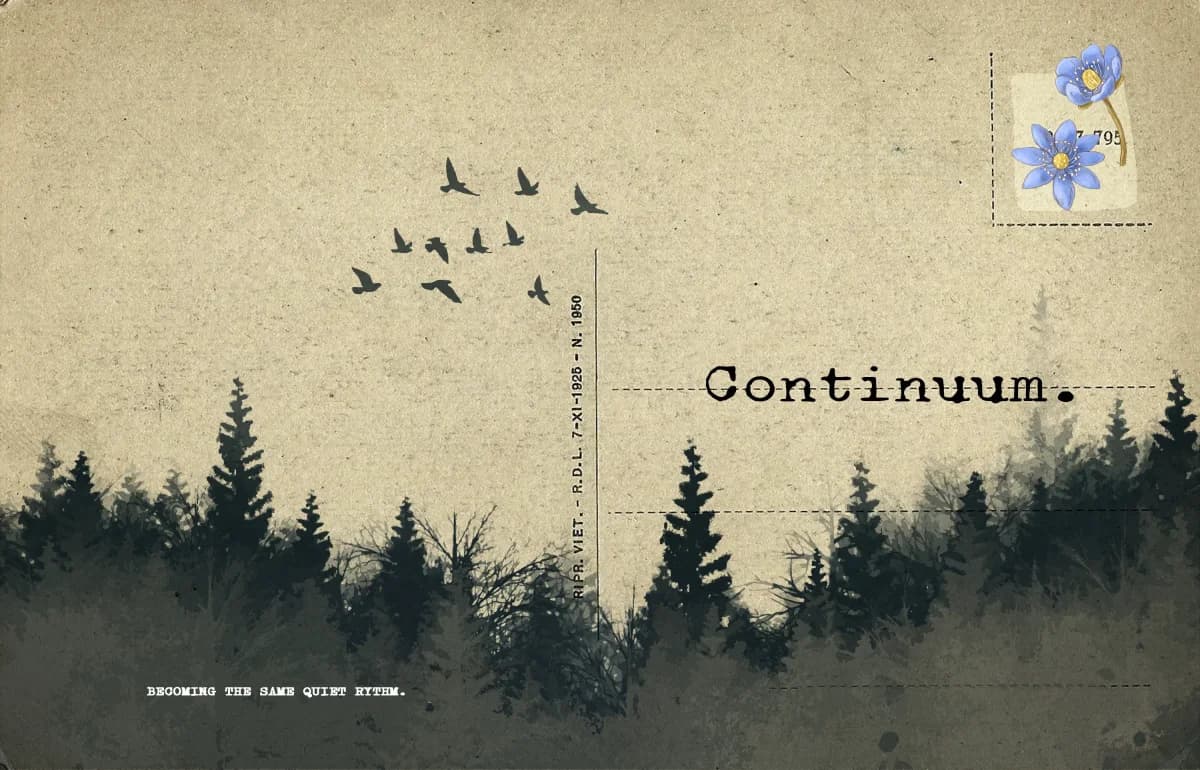
But very few of us have seen where coffee truly begins. Not in a warehouse or a roasting drum, but beneath the shade of towering trees where the morning mist lingers a little longer. In forests alive with birdsong, where streams carve their way through rich earth and sunlight filters gently through layers of leaves, coffee has been growing for centuries. It was here, long before it became one of the world's most traded commodities, that coffee learned to thrive. It was never meant to grow alone. Wild coffee evolved as part of a forest. The trees above protected it from harsh sunlight, fallen leaves returned nutrients to the soil, insects pollinated its blossoms, and birds kept the delicate balance of life intact. Every season, every rainfall, every living creature became part of the same quiet rhythm. Coffee wasn't simply another plant in the forest—it belonged to it.
The Forest Is Part of the Flavor
Perhaps that's why the finest coffees often carry something difficult to describe. Beyond sweetness or acidity, beyond notes of chocolate or citrus, there is a sense of place. A cup somehow remembers the mountain air that cooled it, the rains that nourished it, and the shade beneath which it slowly matured. Yet the forests that shaped coffee are becoming increasingly fragile. As global demand has grown, many landscapes have changed with it. Forests have been cleared to make room for larger farms, replacing diverse ecosystems with endless rows of coffee plants exposed to direct sunlight. At first glance, these farms seem efficient. More sunlight encourages faster growth, and faster growth often means larger harvests. But nature rarely measures success in seasons. It measures success in generations. Without trees, the soil slowly loses its richness. Rain no longer settles gently into the earth but rushes across the surface, carrying fertile ground away with it. Birds disappear as their habitats vanish. Pollinators become fewer. Temperatures climb. The very conditions that once allowed coffee to flourish begin to fade. Ironically, the pursuit of producing more coffee can slowly make growing exceptional coffee far more difficult.
Nature Knows Best
Walk through a healthy shade-grown coffee farm and you begin to understand why forests matter. The air is noticeably cooler. Tall native trees stretch above the coffee plants, softening the intensity of the sun. Pepper vines wind their way around ancient trunks. Ferns, wildflowers, and countless small plants fill the spaces in between. Butterflies drift quietly through the undergrowth while birds move effortlessly across the canopy overhead. Nothing exists in isolation. The forest isn't simply surrounding the coffee; it is actively sustaining it. Every fallen leaf becomes tomorrow's soil. Every flowering tree feeds bees and other pollinators. Every bird helps control insects that might otherwise overwhelm the crop. Even the shade itself slows the ripening of coffee cherries, allowing them to develop greater sweetness and complexity before harvest. The remarkable flavours we admire in a cup often begin with things we never taste directly. A healthy forest leaves its signature in subtle ways.
Sustainability Begins with Respect
When we speak about sustainability, it's easy to imagine certifications, recycling symbols, or technical farming practices. While these all have their place, sustainability begins with something far simpler: respect. Respect for the land that continues to give. Respect for the farmer who chooses patience over shortcuts. Respect for ecosystems that have quietly perfected themselves over thousands of years without asking for recognition. These choices are rarely the easiest ones. Growing coffee beneath a living canopy often produces fewer cherries than intensive farming methods. Protecting old trees may reduce the amount of land available for cultivation. Caring for biodiversity requires time, observation, and a willingness to think beyond the next harvest. Yet these are the decisions that allow forests to remain forests rather than becoming memories.
Every Choice Shapes the Future
Perhaps the greatest irony is that the future of coffee depends on protecting everything except coffee itself. It depends on preserving rivers that irrigate the hillsides. On safeguarding birds that nest high above the plantations. On protecting insects that pollinate countless flowering plants. On ensuring that ancient trees continue casting their shade across the landscape. When these thrive, coffee thrives with them. When they disappear, coffee slowly begins to lose the world that made it possible. As coffee drinkers, it's easy to feel removed from these distant landscapes. After all, most of us will never walk through the forests where our morning cup began. We'll never meet the farmer who waited patiently for the cherries to ripen or the family that chose to preserve an old shade tree instead of cutting it down. Yet every cup quietly connects us to those decisions. Every purchase is, in some small way, a vote for the kind of coffee-growing world we wish to encourage. Choosing coffee grown with care for its environment isn't simply about protecting nature. It's about preserving the conditions that allow extraordinary coffee to exist in the first place.
The Forest Lives On in Every Cup
Perhaps sustainability isn't really about saving coffee. Coffee has survived for centuries. The real question is whether the forests that gave it life will survive alongside it. The next time you prepare a cup, pause for just a moment before taking the first sip. Imagine the journey hidden inside it—not only the farmer, the processor, or the roaster, but the forest itself. The towering trees that softened the sun. The birds that greeted each morning before anyone arrived. The rain that filtered patiently through leaves before reaching the roots below. That forest is still there, quietly present in ways we rarely notice. Every remarkable cup carries a memory of the landscape that made it possible. Protecting coffee, then, begins long before we brew it. It begins by protecting the forests that continue, even today, to fill our cups.
Sustainability is more than a promise on a label. It's the understanding that every cup of coffee is rooted in living forests, healthy soil, and generations of careful stewardship. To protect coffee's future, we must first protect the world that gives it life.