
The story of specialty coffee has been told so often that many of us have begun to believe its newest chapter is also its first. We are surrounded by beautifully engineered brewers, precision kettles, digital scales and machines capable of measuring fractions of a degree. They are remarkable achievements, and they have undoubtedly helped us understand coffee more deeply than ever before. They have shown us how extraction changes with temperature, how grind size influences sweetness, how water chemistry shapes flavour and how consistency can transform an ordinary cup into an exceptional one. Their contribution to coffee is undeniable. Yet somewhere in celebrating these tools, we quietly began to mistake them for the coffee itself. Coffee has never made that mistake. Long before brewing became an industry of equipment, coffee belonged to ordinary people. It belonged to kitchens before it belonged to cafés, to homes before it belonged to championships and to everyday rituals before it became an object of technical fascination. Across the Ethiopian Highlands, coffee simmered gently inside clay jebenas over charcoal fires while families gathered around the ceremony, not because they were chasing perfection but because they understood that good coffee deserved time. Across Yemen and the Arabian Peninsula, it rested patiently inside the curved silhouette of the dallah, poured slowly as a gesture of hospitality that often carried more meaning than conversation itself. In Europe, blackened enamel pots sat quietly on wood-fired stoves, brewing coffee that marked the beginning of another day's labour. In countless homes across southern India, coffee beans were roasted by hand in iron pans, cooled beneath open skies, ground in simple mills and brewed without scales, thermometers or carefully written recipes. Knowledge was carried in memory, not manuals. Experience was measured in years rather than grams. None of these traditions believed that remarkable coffee depended on remarkable equipment. The pot was never celebrated more than what it contained. The vessel was respected because it served the coffee, not because it defined it. Good coffee was understood long before anyone began measuring extraction percentages. It was recognised by aroma before numbers, by memory before theory and by the quiet satisfaction that followed every cup shared around a table. Then there was the cowboy. History often remembers cowboy coffee as a rough and improvised drink, something born from necessity rather than intention. It is usually described as coarse grounds thrown carelessly into boiling water over an open fire, brewed only because there was no better alternative. Yet that version of the story says more about our assumptions than it does about the people who brewed it. Cowboy coffee was never careless. It was uncompromising. Water was brought to a boil over an open flame. Coffee grounds were added directly into the pot. Time performed the extraction. Gravity settled the grounds. Patience completed the brew. Nothing separated the coffee from the person drinking it except the simplest forces of nature. There was no paper filter polishing away texture, no pressure profile shaping the cup and no elaborate brewer standing between the bean and the drinker. The method demanded almost nothing except one thing that could never be replaced. Good coffee. That is why cowboy coffee deserves more respect than history often gives it. It strips coffee back to its oldest truth. If the bean has been cultivated with care, harvested at the right moment, processed with understanding and roasted with restraint, it does not require elaborate machinery to justify itself. A remarkable coffee does not become remarkable because it passes through an expensive brewer. It arrives remarkable. Every brewing method that follows is simply another way of introducing us to what was already there.
Perhaps that is why specialty coffee should never intimidate anyone.
Perhaps this is also where specialty coffee has sometimes become misunderstood. The movement was never founded to celebrate equipment. It was founded to celebrate agriculture. It asked people to look beyond anonymous commodities and begin recognising the landscapes, climates, farmers and harvests that shaped every cup. It reminded us that coffee has origins, seasons and stories. It taught us that flavour begins long before brewing ever begins. Yet as specialty coffee grew, the conversation gradually shifted. The final act of brewing slowly became louder than everything that came before it. The dripper became more visible than the farmer. The grinder became more desirable than the harvest. The equipment became easier to admire than the years of work required to grow exceptional coffee. The irony is difficult to ignore. A movement created to bring us closer to the people behind coffee sometimes makes ordinary people feel as though they stand outside its gates. Newcomers often assume they need a collection of expensive equipment before they are worthy of brewing specialty coffee at home. They imagine that appreciation requires expertise and that enjoyment demands technical fluency. Neither has ever been true. Coffee has always been more generous than that. It has always belonged to ordinary hands. The phrase itself has become burdened with assumptions, as though appreciating better coffee requires fluency in extraction theory or a cupboard filled with carefully collected equipment. It does not. Specialty coffee is not a reward for expertise. It is simply coffee whose journey—from farm to roast—has been treated with uncommon care. Brewing is only the final chapter. It should never become the gate that keeps people out. And this is where the story changes. We speak of cowboys as though they belonged only to distant frontiers, riding beneath enormous skies with a blackened pot hanging above a campfire. We admire the simplicity of their method because it feels adventurous, almost mythical. Yet most of us have already known that same simplicity all our lives. Long before we heard the words specialty coffee, someone at home was already standing before a flame with quiet confidence. A mother reached for the same steel pot she had used for years. She never owned a precision kettle. She never checked the temperature with a digital display. She listened to the water. She watched the bubbles. She knew, by instinct refined through repetition, exactly when the coffee was ready. She was not trying to produce an experience. She was simply making coffee for the people she loved. No one called her a cowboy. Perhaps they should have. Because the cowboy was never defined by a horse, a hat or a landscape. The cowboy was defined by trust. Trust in simple tools. Trust in honest work. Trust that skill is carried in the hands before it is purchased from a shelf.
By that measure, the world has always been full of cowboys.
They have stood in kitchens before sunrise while the rest of the house still slept. They have brewed coffee before school, before harvest, before long journeys, before ordinary days that demanded extraordinary resilience. They have worked without applause, repeating the same quiet ritual until it became part of the architecture of home itself. Specialty coffee does not ask us to abandon those people. It asks us to honour them. Use a V60 if you enjoy the ritual. Brew espresso if precision fascinates you. Reach for a French press, a moka pot or an AeroPress if they suit your mornings. And if all you have is an old pot on a stove or a fire beneath the open sky, brew with that instead. The vessel has always been secondary. The respect has always come first. The greatest lesson cowboy coffee leaves behind is not a recipe.
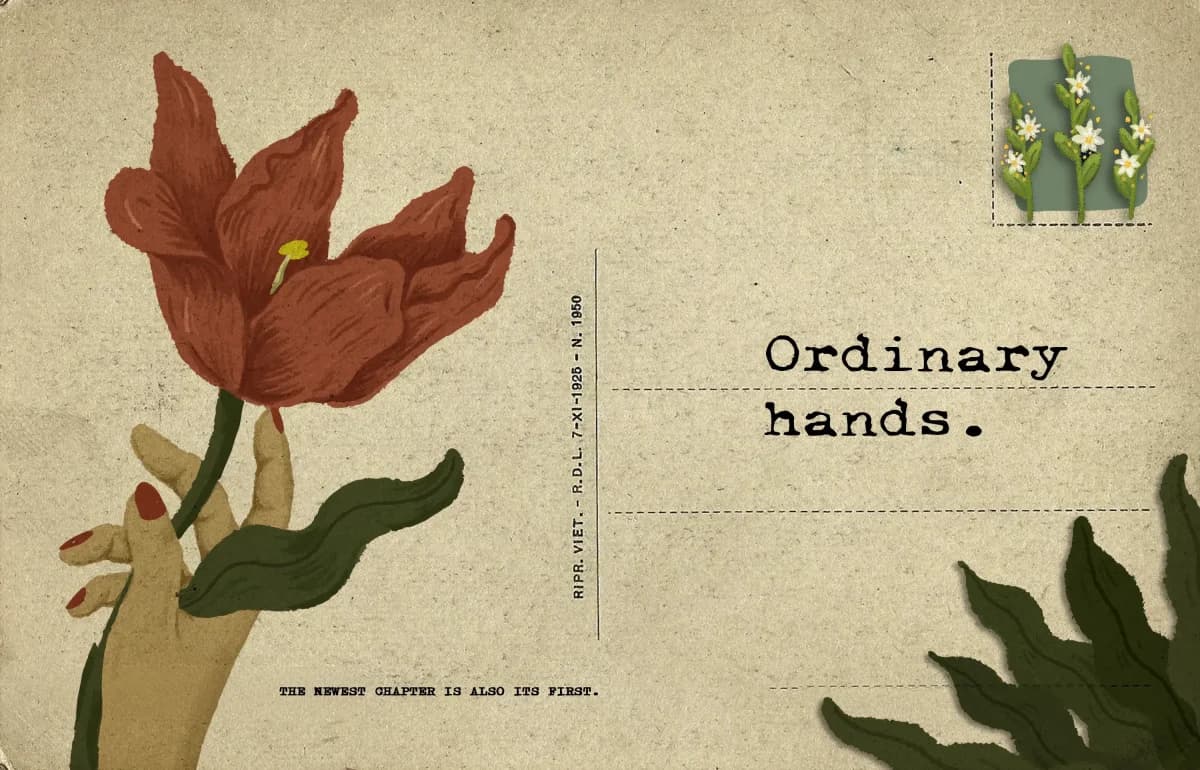
Extraordinary coffee has always belonged to ordinary hands. It belonged to those who never measured their skill by the tools they owned, but by the care they brought to every cup. It belonged to mothers who learned the language of boiling water without ever reading a brewing guide, to farmers who drank from the very harvest they had raised, to travellers who gathered around campfires beneath open skies, and to families who found comfort in the familiar rhythm of a pot gently simmering before dawn. None of them waited for permission to appreciate good coffee. None of them needed expensive equipment to discover its beauty. Perhaps that is what specialty coffee should remind us of, rather than persuade us to forget. At its heart, it is not an invitation to collect better tools but to value better coffee. It asks us to look beyond the cup and recognise the people, the landscapes and the seasons that shaped it long before it reached our kitchen. The brewer, however beautiful, remains only a vessel. The true craft began in the soil, continued through countless hands and ends only when someone pauses long enough to share a cup with another. If coffee has survived centuries of changing empires, technologies and tastes, it is because it was never sustained by machinery alone. It was sustained by ordinary people who believed that some rituals were worth repeating every single day. Perhaps the future of specialty coffee does not lie in becoming more complicated, but in becoming more familiar again—in returning exceptional coffee to the place where it has always belonged. To the kitchen. To the table. To the quiet moments between people. Because extraordinary coffee has never belonged to cafés, competitions or expensive brewers alone. It has always belonged to ordinary hands.