
Long before there was a name, a logo, or a business, there was an instinct to explore the world through coffee and to understand why the same seed lot could speak so differently depending on where it was grown. For a significant part of our lives, we lived in North America. It was there that specialty coffee became more than a drink. Cafés became classrooms, and every bag of coffee became an invitation to discover another landscape. We tasted coffees from Ethiopia, Colombia, Guatemala, Kenya, Costa Rica, Brazil, Panama, Rwanda, Indonesia, and many other origins. Each one challenged what we believed coffee could be.
the process of unlearning
Our early steps into the specialty coffee world were not always welcoming. We encountered people who hid behind technical language and used it less as a tool for education and more as a wall. Without naming names, it is enough to say that there were moments when coffee felt guarded by gatekeepers—people who seemed more interested in discouraging us than in helping us learn. At first, that hit us like a bullet. It made us wonder whether this industry was meant for people like us at all. Then reality hit in a different way. Instead of accepting that exclusion as truth, we began to unwind everything we had been told. We chose not to rely on those who tried to make coffee feel inaccessible. We took responsibility for our own learning. We started from an empty cup and filled it slowly, one step at a time. We delved into aroma and taste, into farmers and farms, into sourcing and roasting, into the business of coffee itself. We fiddled with equipment, studied roasters, followed rabbit holes, asked better questions, and learned to trust what we could observe, taste, and verify for ourselves. In that process of unlearning, we found clarity. We also found the right people. Sourcing partners who cared about integrity. Farm partners who understood the land and the work it demands. Artists and writers who could translate feeling into form. And, most importantly, people in coffee who were there not for performance or prestige, but purely out of love and principle. The more we let go of the noise, the more we found a community that reflected the kind of coffee world we wanted to build. We discovered that flavour is never an accident. It is the consequence of altitude, rainfall, volcanic soils, forests, processing traditions, harvest timing, and countless decisions made by people whose names rarely appear on the bag. Coffee was no longer something to consume. It became something to understand. The more we travelled, the more we realised that exceptional coffee begins long before roasting and long before brewing. It begins in places. It begins where mornings arrive wrapped in mist, where forests regulate the climate, where birds and insects quietly sustain ecosystems, where shade trees slow the ripening of cherries, and where generations of growers learn to read the seasons with an intuition that no textbook can teach.
navigation
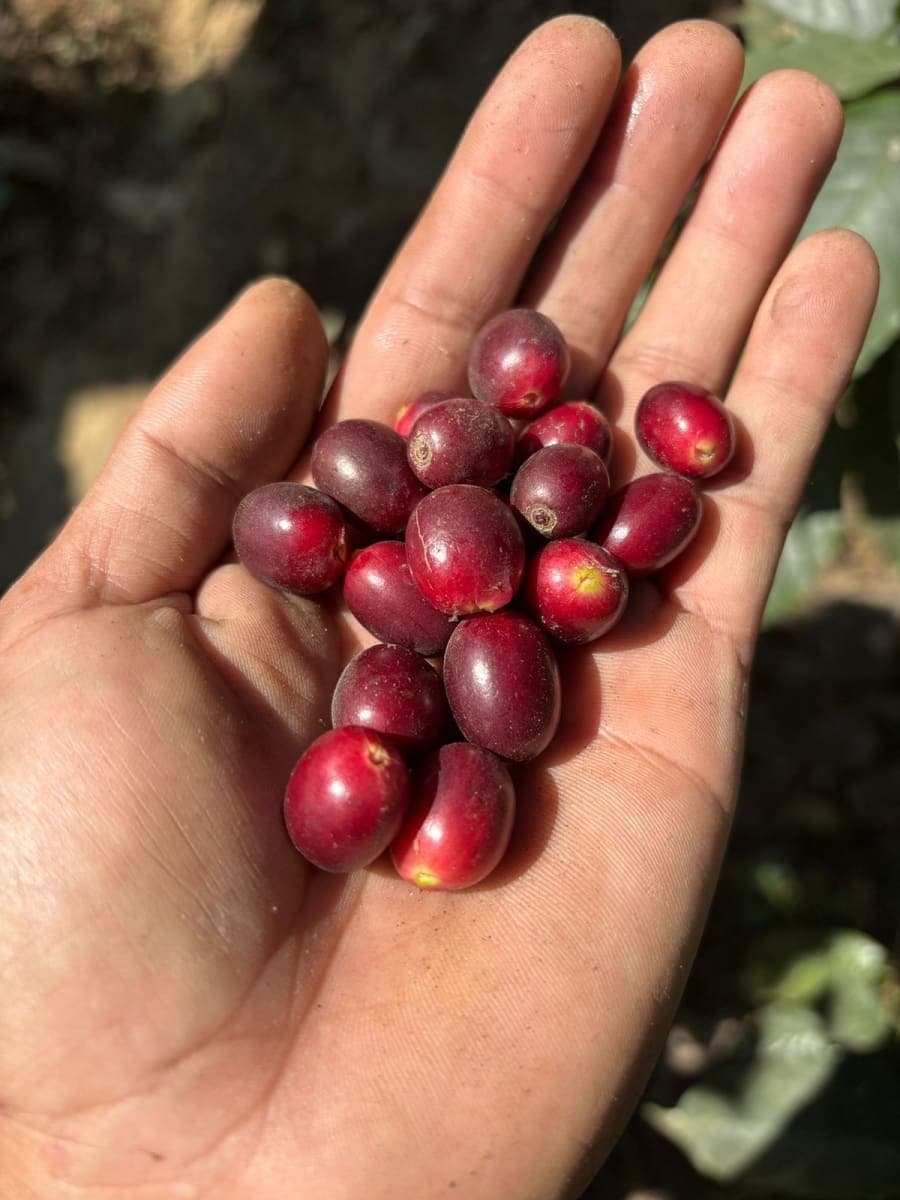
Living abroad taught us to admire coffee from distant countries. Returning home taught us to admire our own. Travelling through Wayanad, Coorg, Chikmagalur, and the Western Ghats revealed landscapes that had always deserved the same respect we so readily gave to famous coffee origins abroad. Coffee here grows beneath towering shade trees alongside pepper vines, spices, fruit trees, and thriving biodiversity. These are not plantations designed to maximise efficiency alone. They are living ecosystems where coffee exists as part of something much larger than itself. Our journeys through Northeast India left an equally lasting impression. The hills, forests, and communities we encountered revealed a region whose coffee story is only beginning to receive the attention it deserves. We met people deeply connected to their land, preserving traditions while embracing new possibilities for specialty coffee. The potential was unmistakable—not because it sought to imitate celebrated origins elsewhere, but because it possessed an identity entirely its own. Travel changed the way we evaluate coffee. We stopped asking whether one origin was better than another. Instead, we began asking what each landscape was trying to say. Every region expresses itself differently. Every harvest reflects a particular year. Every cup is shaped by conditions that can never be perfectly repeated. That belief continues to guide every decision we make.
craft cannot be purchased
We source coffees because they represent places, not because they satisfy trends. Every coffee we choose carries the character of a landscape, the memory of a season, and the work of countless hands before it reaches our roastery. Our responsibility is not to reinvent those stories, but to preserve them. We roast with restraint because the finest coffees do not ask to be transformed into something else; they ask to be understood. The role of a roaster is not to overshadow an origin, but to reveal it with honesty. We roast on a Probat machine—a name that has become synonymous with specialty coffee around the world. It is an extraordinary tool, one that offers precision, consistency, and control. But we refuse to mistake the tool for the craft. A remarkable roaster cannot compensate for a lack of understanding, just as a modest one cannot prevent excellence in capable hands. Machines execute decisions; they do not make them. Roasting begins long before the first bean enters the drum. It begins with studying the origin, understanding the variety, respecting the processing method, and recognising what the coffee is capable of becoming. It demands patience, observation, restraint, and the humility to let the coffee speak for itself. Technology may refine the process, but it is curiosity, experience, and judgement that ultimately shape the roast. We believe great coffee has never been defined by the equipment that produced it. It has always been defined by the people who understood it.
deepwaters
Kaapilibre exists because we believe extraordinary coffee should never belong to a select few. For too long, understanding coffee has been hidden behind jargon, exclusivity, and the illusion that appreciation requires permission. Our own journey was one of unlearning assumptions and relearning coffee from the ground up—not through trends, but through curiosity, travel, conversations, and experience. We questioned what we were told, sought answers where they were grown, and discovered that the deeper we looked, the simpler coffee became. What emerged was not just knowledge, but conviction. Today, we roast with clarity because we understand the path that brought us here, and we exist to make that path easier for everyone who follows. Travel transformed that understanding. It revealed that the world of coffee is far larger than flavour notes or brewing recipes. Coffee is geography made tangible. It is forests that shape climate, mountains that slow the ripening of fruit, soils that leave an unmistakable signature, and generations of growers whose quiet decisions echo in every cup. Every origin carries its own history, culture, and way of seeing the world. The more we travelled, the more we realised that to understand coffee is to understand the places and people who have devoted their lives to it.
passport
At Kaapilibre, we believe coffee is a passport. Not one that stamps pages, but one that quietly carries us across forests, mountains, villages, and generations. Within a single cup lives an entire landscape—the rhythm of its seasons, the richness of its soil, the patience of its growers, and the traditions that have shaped it for decades. Coffee allows us to experience places long before we ever set foot in them, and in doing so, it teaches us to see our own landscapes with renewed wonder. Every origin is an invitation to leave behind assumptions and discover a different way of understanding the world. To brew coffee is to begin a conversation with a place. To drink it is to listen. Because every origin has a voice. Some speak in whispers carried by mist-covered mountains. Others echo through ancient forests, volcanic valleys, or generations of families who have devoted their lives to the land. Our role is not to speak over those voices, but to make sure they are heard. That is why we travel. That is why we source. That is why we roast. So that every cup tells the truth about where it came from. And every person who drinks it leaves with a little more of the world than they had before.