

The difference lies in how the coffee is brewed and what is added afterwards. Some drinks use milk, some use only water, while others are brewed in entirely different ways. Once you understand these basics, ordering—or brewing—the perfect cup becomes much easier.
Understanding Coffee Drinks
Espresso
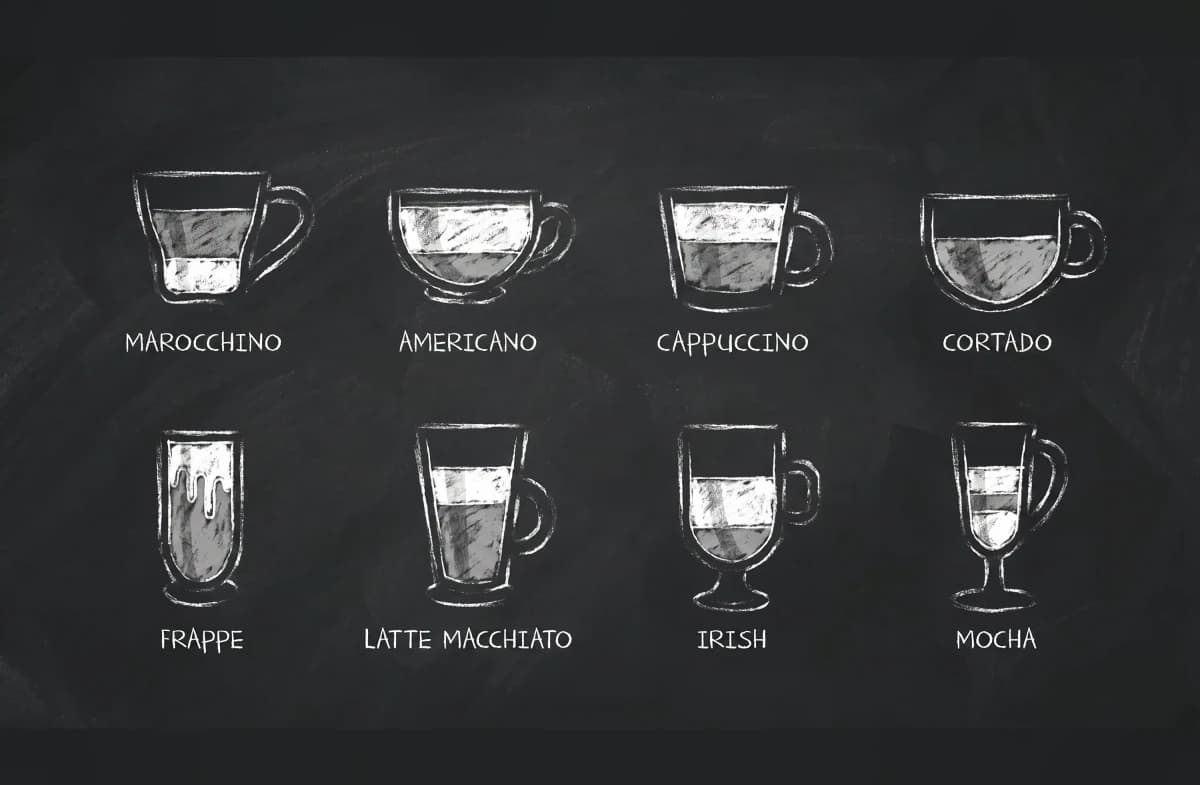
It is a small, concentrated shot of coffee made by forcing hot water through finely ground coffee under high pressure. The result is a rich, full-bodied coffee with an intense flavour and a golden layer of crema on top. Although espresso tastes stronger than regular coffee, a single shot often contains less caffeine than a large mug of filter coffee, simply because the serving size is much smaller. Contains: Espresso only
Americano
An Americano is simply espresso with hot water added. Adding water softens the intensity while keeping the flavour of espresso intact. It offers a drinking experience similar to black coffee but with the distinct character of espresso. Contains: Espresso + Hot Water
Latte
A Latte is one of the smoothest and creamiest coffee drinks. It combines a shot of espresso with a generous amount of steamed milk and a thin layer of milk foam. The extra milk makes the coffee mellow, making it an excellent choice for those new to coffee. Contains: Espresso + Steamed Milk + Light Foam
Cappuccino
A Cappuccino has a stronger coffee flavour than a latte because it contains less milk and more foam. Traditionally, it is made with equal parts espresso, steamed milk, and milk foam, creating a balanced drink with a rich, airy texture. Contains: Espresso + Steamed Milk + Thick Milk Foam
Flat White
Originating in Australia and New Zealand, the Flat White is similar to a latte but contains less milk and a finer, silkier texture. This allows the espresso to remain the star of the drink while still being smooth and creamy. Contains: Espresso + Silky Steamed Milk
Cortado
The Cortado originated in Spain. It combines equal parts espresso and warm milk, producing a balanced drink where the milk reduces the espresso's sharpness without masking its flavour. Contains: Equal Parts Espresso and Warm Milk
Macchiato
"Macchiato" means "marked" in Italian. An espresso is simply "marked" with a small amount of milk foam, softening its edges while preserving its bold character. Contains: Espresso + Small Amount of Milk Foam
Mocha
A Mocha is essentially a chocolate-flavoured latte. Espresso, steamed milk, and chocolate combine to create one of the sweetest and most indulgent coffee drinks. Contains: Espresso + Chocolate + Steamed Milk
Filter Coffee
Unlike espresso, filter coffee is brewed by allowing hot water to slowly pass through coffee grounds using gravity rather than pressure. The result is a cleaner, lighter-bodied cup that showcases the coffee's natural sweetness, aroma, and origin.
French Press Coffee
Coffee grounds are steeped directly in hot water before being separated with a metal plunger. Since there is no paper filter, more natural coffee oils remain in the cup, producing a richer, heavier mouthfeel.
Cold Brew
Cold Brew isn't simply coffee served cold. Instead, coffee is steeped in cold water for 12 to 24 hours before being filtered. This slow extraction creates a naturally sweeter, smoother coffee with lower acidity.
Iced Coffee Drinks
Many coffee drinks can also be enjoyed over ice. Iced Americano: Espresso + Cold Water + Ice Iced Latte: Espresso + Cold Milk + Ice Cold Brew: Slow-steeped coffee served over ice
How Are These Drinks Made?
Over the centuries, people around the world developed different ways of brewing coffee to suit their culture, lifestyle, and everyday needs. Some methods use pressure, others rely on gravity, while some simply steep coffee in water. Each brewing method produces a unique cup—and each has its own story.
Espresso Machine
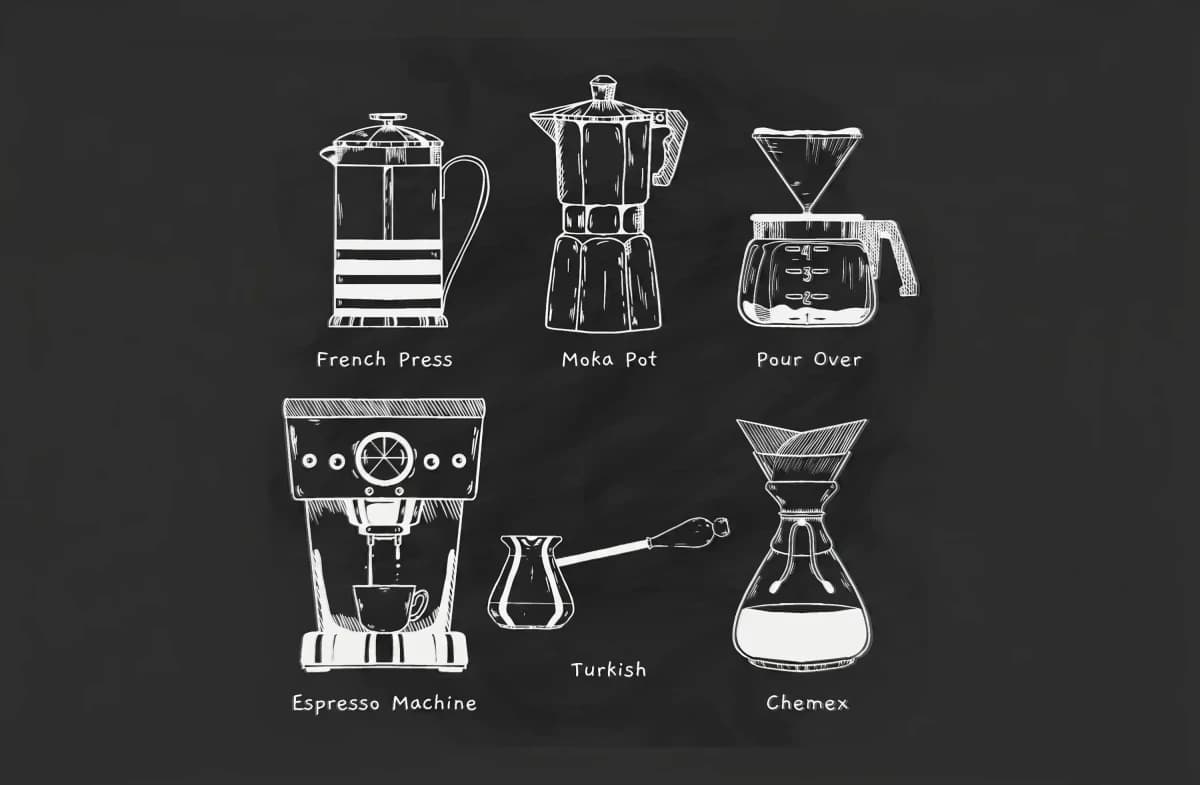
Origin: Italy (Early 1900s) The espresso machine was developed in Italy to serve coffee quickly to busy workers. Instead of waiting several minutes for coffee to brew, hot water is forced through finely ground coffee under high pressure in about 25–30 seconds. The result is espresso—the foundation of most café drinks. Coffee Drinks It Makes Espresso, Americano, Latte, Cappuccino, Flat White, Cortado, Macchiato, Mocha Home Options °Semi-Automatic Espresso Machine °Automatic Espresso Machine °Lever Espresso Machine °Manual Espresso Makers (Flair, Cafelat Robot, Rok)
Moka Pot
Origin: Italy (1933) Invented by Alfonso Bialetti, the Moka Pot was designed to bring strong, espresso-style coffee into ordinary homes. Using steam pressure generated on a stovetop, it brews a bold, concentrated coffee. While it doesn't produce true espresso, it's an affordable alternative that's ideal for milk-based drinks. Best For °Strong black coffee °Homemade lattes and cappuccinos
South Indian Filter
Origin: Southern India As coffee cultivation flourished across Karnataka, Kerala, and Tamil Nadu, the South Indian filter became a household staple. Hot water slowly drips through finely ground coffee, creating a concentrated decoction traditionally mixed with hot milk and sugar. Best For Traditional South Indian Filter Coffee.
Pour Over
Origin: Germany (1908) The modern pour-over began when Melitta Bentz invented the paper coffee filter to remove bitterness and coffee grounds from brewed coffee. Hot water is poured slowly over coffee grounds, allowing gravity to extract the coffee evenly. The result is a clean, delicate cup that beautifully highlights the bean's natural flavours. Popular Brewers °V60 (Japan) °Kalita Wave (Japan) °Origami Dripper (Japan) Best For Single-origin coffees and light to medium roasts.
Chemex
Origin: United States (1941) Invented by chemist Peter Schlumbohm, the Chemex combines elegant design with scientific precision. Its thick paper filters remove more oils than standard filters, producing one of the cleanest and brightest cups of coffee. Best For Floral, fruity, and lightly roasted coffees
French Press
Origin: France (Later refined in Italy) Created as a simple brewer requiring no electricity or paper filters, the French Press remains one of the easiest ways to brew coffee at home. Coffee steeps directly in water before being separated with a metal plunger, producing a rich, full-bodied cup. Best For Chocolatey, nutty, medium, and dark roasts.
AeroPress
Origin: United States (2005) Invented by engineer Alan Adler, the AeroPress was designed to make consistently smooth coffee with minimal bitterness. By combining immersion brewing with gentle pressure, it produces a clean cup while remaining compact enough for travel. Best For °Everyday brewing °Travel °Experimenting with recipes
Cold Brew Maker
Origin: Popularised in Japan and the United States Cold brew became popular as people searched for a smoother, less acidic alternative to iced coffee. Coffee grounds steep slowly in cold water for 12–24 hours before being filtered. Best For Refreshing summer coffee.
Electric Drip Coffee Machine
Origin: Germany & United States Electric drip brewers were created for convenience, allowing several cups of coffee to be brewed automatically with minimal effort. They're commonly found in homes, offices, and hotels around the world. Best For Daily coffee drinkers and families.
Siphon Brewer
Origin: Europe (1830s) One of the earliest scientific coffee brewers, the siphon uses heat and vacuum pressure to brew coffee. Its fascinating brewing process has made it a favourite among specialty cafés and coffee enthusiasts. Best For Precision brewing and experimentation.
Turkish Cezve
Origin: Ottoman Empire (Modern-day Türkiye) One of the world's oldest brewing methods, Turkish coffee is prepared by simmering extremely fine coffee grounds directly in water. The coffee is served unfiltered, creating a thick, rich, and traditional cup. Best For Traditional Middle Eastern and Balkan coffee.
Which Brewer Makes Which Drink?
Espresso Machine - Espresso, Americano, Latte, Cappuccino, Flat White, Cortado, Macchiato, Mocha Moka Pot - Strong, concentrated coffee South Indian Filter - South Indian Filter Coffee Pour Over (V60, Kalita, Origami) - Black Filter Coffee Chemex - Bright, clean Filter Coffee French Press - Rich, full-bodied Black Coffee AeroPress - Black Coffee or espresso - style concentrate Cold Brew Maker - Cold Brew Turkish Cezve - Turkish Coffee Electric Drip Machine - Batch Filter Coffee
Choosing Your First Brewer
There is no single "best" way to brew coffee—only the method that suits your taste and lifestyle. If you enjoy café-style drinks like lattes and cappuccinos, an espresso machine is the natural choice. If you're interested in exploring the unique flavours of specialty coffee, a pour-over brewer or Chemex will offer exceptional clarity. Those who prefer a richer, fuller cup may gravitate towards the French Press or Moka Pot, while the AeroPress is perfect for versatility and travel. If convenience is your priority, an electric drip brewer makes consistently good coffee with very little effort. Every brewing method tells a story of the people and cultures that created it. Whether it was designed for speed in the cafés of Italy, comfort in the homes of South India, or precision in modern specialty coffee shops, each method exists for the same purpose—to bring out the best in every coffee bean.